Traditional Marketing vs Digital Marketing – Why Digital is the Future
Marketing has always been an important part of business success. In the past, companies depended on traditional marketing methods such as newspapers, television, radio, and billboards to promote their products and services. However, with the growth of the internet and technology, digital marketing has become the most powerful way to reach customers. Today, businesses are moving from traditional marketing to digital marketing because it is more effective, affordable, and measurable.
Understanding the difference between traditional marketing and digital marketing helps us see why digital marketing is the future.
What is Traditional Marketing?
Traditional marketing refers to offline methods of advertising that were used before the internet became popular. These methods include television ads, newspaper advertisements, radio commercials, posters, brochures, and billboards.
Traditional marketing can reach a large number of people, but it has some limitations. It is usually expensive, difficult to measure results, and cannot easily target a specific audience. For example, a TV advertisement is shown to everyone watching the channel, even if they are not interested in the product.
Because of these limitations, many businesses are now using digital marketing instead of traditional marketing.
What is Digital Marketing?
Digital marketing is the promotion of products or services using online platforms such as search engines, social media, websites, email, and mobile apps. It allows businesses to connect directly with their target audience and measure the performance of their campaigns.
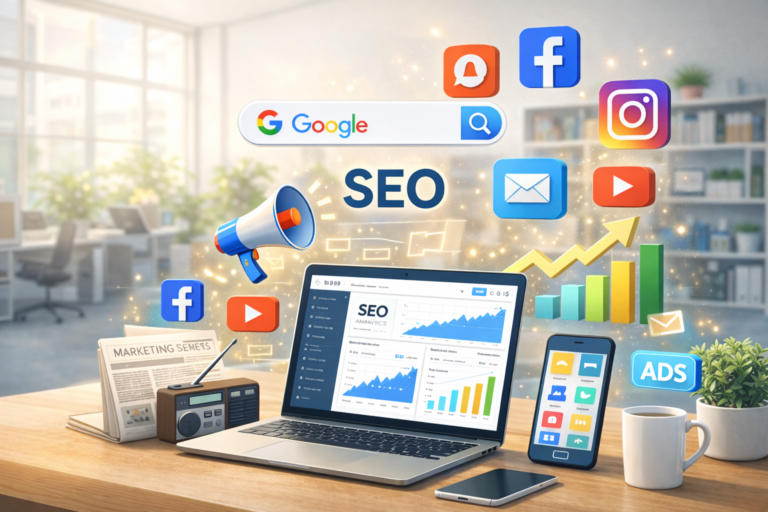
Digital marketing includes different methods such as Search Engine Optimization (SEO), social media marketing, content marketing, email marketing, and online advertising. These methods help businesses reach customers faster and more effectively than traditional marketing.
One of the biggest advantages of digital marketing is that it allows businesses to show the right message to the right people at the right time.
Cost Comparison: Traditional vs Digital
Traditional marketing usually requires a high budget. Advertising on television, printing newspapers, or putting up billboards can cost a lot of money, which makes it difficult for small businesses to compete.
Digital marketing is more affordable and flexible. Even with a small budget, businesses can run ads on social media, improve their website ranking using SEO, or send email campaigns to customers. This makes digital marketing a better choice for startups and small companies.
Because of its low cost and high reach, digital marketing is becoming the preferred marketing method for modern businesses.
Target Audience and Reach
One of the biggest differences between traditional and digital marketing is targeting. Traditional marketing shows ads to a general audience, but digital marketing allows businesses to choose exactly who will see their ads.
For example, with digital marketing, a company can target people based on age, location, interests, and online behavior. This makes marketing more effective and increases the chances of getting customers.
Digital marketing also allows businesses to reach people all over the world, while traditional marketing is usually limited to a specific area.
Measurable Results
In traditional marketing, it is difficult to know how many people actually saw the advertisement or became customers because of it. Businesses often spend money without knowing the exact results.
Digital marketing provides clear data and analytics. Businesses can track website visits, clicks, conversions, and customer behavior in real time. This helps companies understand what works and what needs improvement.
Because results can be measured easily, digital marketing helps businesses make better decisions.
Why Digital Marketing is the Future
The world is becoming more digital every day. People use smartphones, social media, and search engines to find information, buy products, and communicate with businesses. Because customers are online, businesses must also be online.
Digital marketing allows companies to grow faster, reach more people, and compete in the global market. It also creates many career opportunities such as SEO specialist, digital marketer, content creator, and social media manager.
As technology continues to grow, digital marketing will become even more important, while traditional marketing will become less effective.
Conclusion
Both traditional marketing and digital marketing have their advantages, but digital marketing is clearly the future. It is more affordable, more targeted, easier to measure, and better suited for today’s online world.
For businesses, learning and using digital marketing is necessary for long-term success. For students and professionals, gaining digital marketing skills can open the door to many exciting career opportunities in the modern digital era.